Fayetteville’s Top Sod Team
Obtain Fayetteville lawn care and sod solutions that adjusts for humid‑subtropical microclimates, soil CEC and pH, and species morphology. You'll obtain soil‑test driven inputs, ET‑based irrigation, and preemergent timing by germination degree‑days. We align bermudagrass, zoysia, St. Augustine, or fescue/bluegrass to sun, traffic, and drainage, then install on a firm, moist subgrade with staggered seams and starter fertilizer. Expect sharp‑blade mowing, thatch and pathogen scouting, and nitrogen staged by season—the following details how it all aligns.
Key Takeaways
- Area specialists tailor programs to Fayetteville's warm humid microclimates, soils, and pest pressures for durable, effective lawns.
- Soil testing guides pH, CEC, and nutrient adjustments; irrigation is planned using evapotranspiration to minimize water consumption.
- Tailored species care separates bermudagrass stolon vigor from fescue tiller density for appropriate mowing, feeding, and overseeding.
- Preemergent timing aligns with soil temperatures and degree‑days; preventive scouting focuses on armyworms, mole crickets, and take‑all root rot.
- Sod selection matches site sunlight, shade, foot traffic, and water drainage; professional installation ensures site grading, starter nutrients, and fast root formation.
The Reason Why Local Expertise Is Essential for Fayetteville Region Lawns
Since Fayetteville is located in a humid subtropical zone with shifting-zone turf pressures, local expertise adjusts management to microclimate, soils, and pest complexes you actually face. You need specialists who analyze soil texture classes, base saturation, and cation exchange capacity, then align nitrogen sourcing and irrigation to evapotranspiration rates. They'll identify bermudagrass stolon vigor from tall fescue tiller density, adjust mowing heights to limit etiolation, and time preemergent herbicides to germination degree-days. With community knowledge, they forecast fall armyworm flights, mole cricket hotspots, and take-all root rot windows. Proper seasonal timing is essential: you'll overseed, dethatch, aerify, and topdress when carbohydrate reserves and soil temperatures promote recovery. Evidence-based scouting-thatch depth, leaf blade chlorosis, pathogen signs-informs precise interventions, minimizing inputs while preserving turfgrass health.
Personalized Lawn Care Services for Every Property
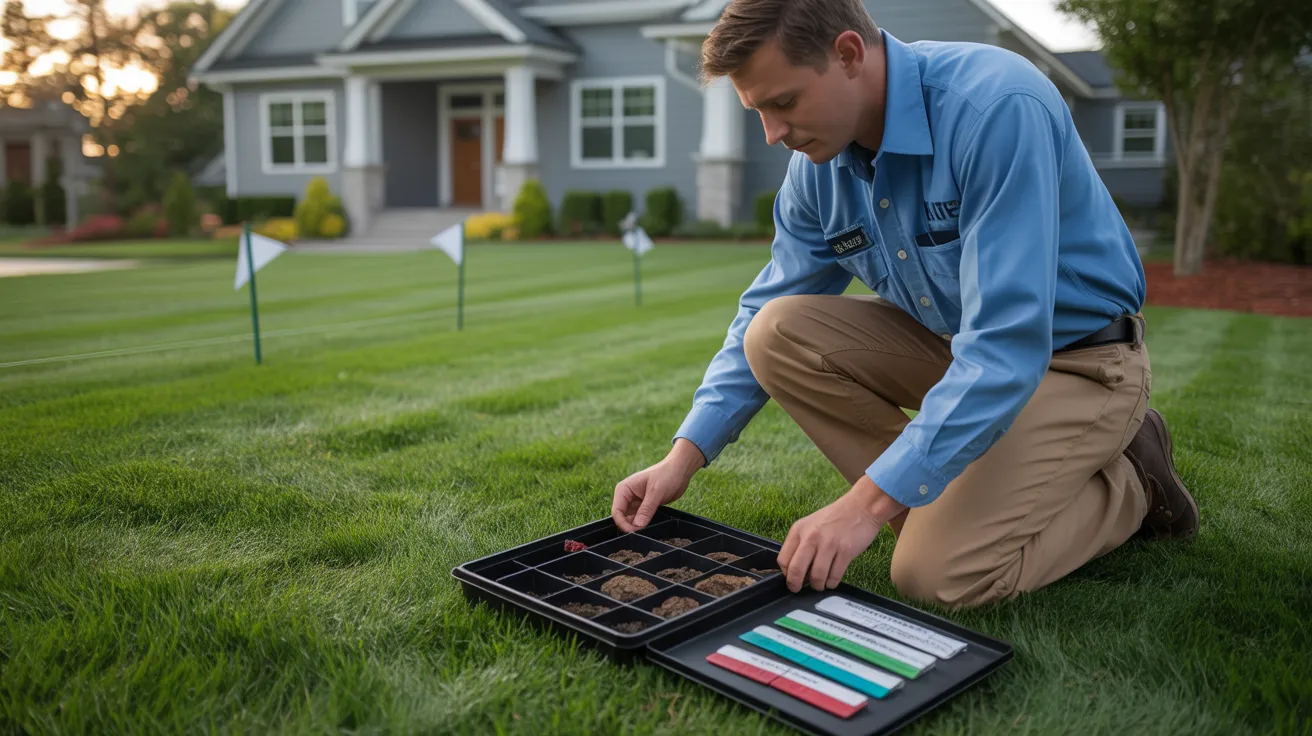
Start with a location-specific assessment, then configure a program that aligns with your turfgrass type, soil profile, and microclimate. You'll map shade gradients, traffic patterns, drainage, and irrigation uniformity, then establish soil testing strategies to measure pH, CEC, organic matter, and nutrient levels. Adjust nitrogen inputs to species physiology and growth habit, timing applications via seasonal sequencing: spring green-up, summer stress reduction, fall root accumulation, and winter click here preparation.
Select herbicide MOAs according to weed spectra and resistance risk; integrate preemergence timing with soil temperatures. Employ targeted micronutrient supplementation where leaf tissue analysis shows deficiency. Set mowing height-of-cut to cultivar morphology and canopy density. Apply aeration and topdressing to alleviate compaction and enhance infiltration. Validate outcomes with NDVI and visual ratings, then iterate the prescription.
Selecting the Ideal Sod: Varieties, Durability, and Visual Appeal
Though appearance is important, you'll choose sod by matching species and cultivar traits to Fayetteville's changing-zone climate and your site's use profile. For full sun and high traffic, consider hybrid bermudagrass (Cynodon dactylon × C. transvaalensis) with fine texture, fast stolon/rhizome spread, and excellent wear tolerance. Zoysia (Zoysia japonica, Z. matrella) provides dense turf, slower growth, and cold resilience; select water-efficient cultivars with documented ET reduction. For partially shaded areas, St. Augustine (Stenotaphrum secundatum) and shade-adapted blends of zoysia surpass bermuda. Tall fescue (Festuca arundinacea) mixed with Kentucky bluegrass contributes cool-season color however may decline in summer heat without irrigation. Evaluate disease resistance (brown patch, spring dead spot), thatch propensity, and leaf blade width. Match sod to soil pH, drainage class, and intended use intensity.
Expert Setup and Ongoing Maintenance
From site assessment through first mowing, professional installation and maintenance prioritize soil physics, plant physiology, and Fayetteville's shift-zone constraints. You'll start with compaction testing, pH and CEC evaluation, then precision grading for surface runoff. Install sod on damp, firm subgrade with staggered seams, guaranteeing rhizome/stolon contact and immediate root-zone hydration via drip irrigation that targets the three-to-four inch profile. Apply starter fertilizer adjusted to soil test, then enforce traffic exclusion until root tensile strength meets tug‑test thresholds.
You'll calibrate mowing height to grass cultivar morphology, ensure sharp blades to minimize xylem cavitation risk, and schedule irrigation by evapotranspiration rates. Implement seasonal overseeding to maintain tiller density and suppress weed invasion. Track thatch accumulation, adjust nitrogen timing, and deploy integrated pest scouting to preempt biotic stress.
Sustainable Practices That Preserve Water and Improve Soil Health
After installation and maintenance protocols established, you can now enhance inputs with practices that conserve water and build resilient soil architecture. Implement smart irrigation with evapotranspiration-based scheduling and matched-precipitation nozzles to decrease runoff and deep percolation. Set precipitation rates to soil infiltration capacity, then irrigate to field capacity, not saturation.
Lay down mulch layers 2-3 inches deep using pine straw or shredded hardwood to prevent evaporation, buffer soil temperature, and promote mycorrhizal networks. Blend in compost at 5-10% by volume to boost cation exchange capacity and microbial biomass, strengthening aggregate stability.
Construct rain gardens on the lower slope to catch building and turf runoff; dimension basins for 1-inch storm events and plant deep-rooted graminoids and facultative perennials. Loosen compacted zones, then topdress with screened compost to reestablish water-holding capacity and porosity.
FAQ
What Are Standard Pricing Rates for Lawn Care and Sod Installation in Fayetteville?
Plan for lawn care to cost $35-$70 per mow, $90-$150 aeration, $60-$120 fertilization, and $50-$100 weed control per application. Sod installation typically runs $1.50-$2.75 per sq ft. Pricing ranges reflect grass variety, soil prep, and site complexity. Material breakdown: sod (between 60-75%), soil amendments (compost, lime, starter fertilizer between 5-10%), irrigation setup (between 10-15%), and labor (between 20-35%). Bermudagrass costs less than zoysiagrass; compaction remediation and grade correction add to the overall price.
How Rapidly Can You Set Up an On-Site Consultation or Estimate?
We can generally arrange an on-site consultation within 24-48 hours; we often have same day availability and evening appointments. Consider it similar to stomata opening at dusk-precise timing maximizes efficiency. We assess by site complexity, soil texture class, turf species, and irrigation access. If you provide photos and square footage, we determine beforehand application rates and route density, speeding up dispatch. Weather windows and crew load play a role, but cancellations can push you forward.
Do You Provide Warranty Coverage or Guarantees on Lawn and Sod Services?
Yes-you get a Sod warranty and a Service guarantee. We cover you against installation defects, cultivar mislabeling, and substandard turf vigor during establishment. We check soil pH, compaction, and irrigation uniformity to fulfill agronomic thresholds. If sod fails stemming from our protocols, we remediate: replace sod, regrade, reseat seams, or amend with compost. Our maintenance plans feature weed control, fertilization calibrated by soil tests, and disease monitoring, guaranteeing durable rhizome/stolon establishment and uniform canopy density.
Can Larger Lawn Renovation or Sod Replacement Projects Be Financed?
Yes-you can finance larger lawn renovation or sod replacement projects. You can select from fixed installment payment plans or loan options offering longer repayment terms for extensive turf restoration. Coverage includes soil remediation, grade releveling, irrigation retrofits, and high-quality sod cultivars (such as TifTuf bermuda, zoysia). Most lenders require a site assessment, estimate of square footage, and scope detailing aeration, dethatching, and pre-plant fertilization. Borrowers receive transparent APRs, milestone itemization, and no prepayment penalties in the majority of cases.
Can I Find Seasonal Promotions or Bundled Service Discounts?
Yes. You can access seasonal promotions through specially designed seasonal packages that align with phenological stages—pre-emergent timing, cool-season fertilization, and warm-season dethatching. Combined service packages usually include aeration, overseeding, irrigation calibration, and soil amendment, lowering per-service cost while enhancing turf vigor. You'll also accumulate loyalty rewards for recurring maintenance intervals, measured by service frequency and canopy response metrics. Ask for a site-specific plan determined by soil texture class, cation exchange capacity, and localized growing degree days.
Final copyright
You act as the custodian of a living machine-every blade a calibrated gear, every single root a sensor. With area-specific proficiency as your schematic, you implement cultivar‑specific sod, site‑adjusted irrigation, and soil amendments that improve cation exchange and microbial guilds. You harmonize mow height with leaf area index, time fertilization to phenology, and integrate IPM thresholds. In this allegory, your lawn is a precision instrument: adjusted by data, hardy under stress, and aesthetically coherent-since you selected experts who engineer ecosystems, not just grass.